
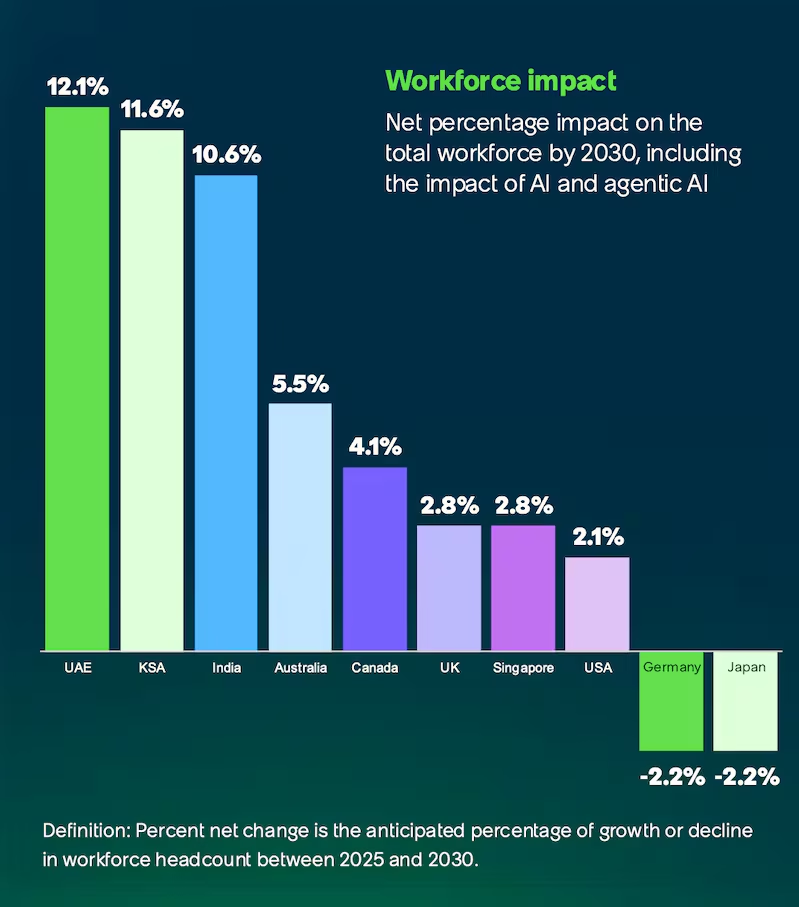
The UAE is projected to add 1 million new jobs by 2030 as part of its push toward artificial intelligence, digital transformation, and technology-driven economic growth. According to a new skills forecast report by ServiceNow and Pearson, this represents a 12.1% increase in the workforce, the highest among the countries studied, compared to 2.1% in the US, 2.8% in the UK, and 10.6% in India.
The demand will span sectors including technology, AI, healthcare, finance, energy, utilities, education, retail, and manufacturing. The report highlights that more than 91,000 additional technology specialists will be needed by 2030, with other in-demand roles in programming, computer systems analysis, and search marketing strategy.
Experts note that AI will augment rather than replace human labor, creating opportunities for upskilling and new career pathways. William O’Neill, GCC Vice President at ServiceNow, emphasized:
“The future of work depends on collaboration between people and AI, and it’s a future that’s hiring now.”
UAE’s efforts include partnerships and investments
The UAE’s efforts include partnerships and investments with tech leaders like Microsoft, Nvidia, and OpenAI, and the development of a 5GW AI data centre campus in Abu Dhabi in collaboration with the US.
Globally, the report found that eight of the ten countries studied will require additional workers to sustain projected economic growth, while Germany and Japan face workforce shrinkage due to demographic trends and slower job creation.

The findings underscore that, despite concerns about AI-driven job displacement, AI augmentation is expected to drive economic growth and expand employment opportunities, particularly in technology and high-skill sectors.
Technology experts surveyed by Pew, however, were significantly more likely – 56 per cent compared with 17 per cent – than the average American to say that AI would have a “very or somewhat positive” impact on society over the next 20 years. ServiceNow and Pearson’s report briefly touches on the negative impacts of AI development, showing that cumulatively among the countries focused on in their report, roles in the finance sector could see the most disruption from “agentic AI”. Broadly speaking, agentic AI is defined as a way to use technology to automate complex decision-making tasks usually performed by humans.